

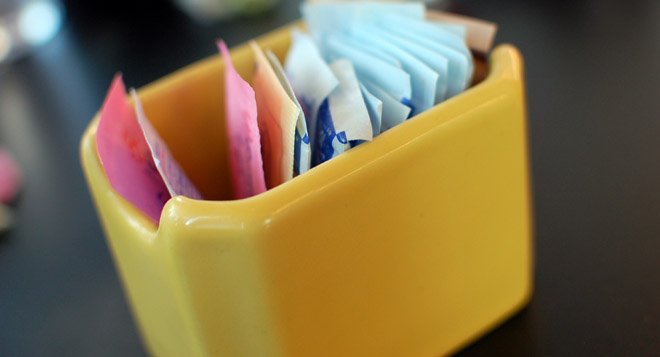
How to choose a sugar substitute
With the World Health Organization reducing ideal sugar intake by five per cent, sugar consumption has become a worldwide public health issue. Sugar alternatives are growing in popularity, with many different chemical compounds popping up in the market. Before you splurge in the grocery aisle, learn what the different types of sweeteners available are and what's right for you.
Sucralose (Splenda)
Splenda is a sucralose-based artificial sweetener, which is 600 times sweeter than sugar. It can be used as a substitute for sugar in food recipes because its sweetness is not altered under heat. As it does not contain calories, Splenda is not a carbohydrate in the body, and does not affect blood sugar levels.
Although sucralose does not have calories, the bulking agent, maltodextrin, a food starch added to give the sweetener texture and volume, contain 0.5 g of crabs and two calories per teaspoon. Even Splenda's No Calorie products contain this, but the calories of maltodextrin will not be listed.
Splenda can change the texture in baking recipes and can also add an 'artificial' taste when used as the only sweetener in the recipe. There have been preliminary rat-based studies showing sucralose's adverse effects on the digestive system, however.
Saccharin (Sweet'n Low)
Sweet'n Low is a brand of artificial sweetener made from saccharin. Saccharin is an organic molecule derived from petroleum. It contains about 300 times the amount of sweetness of sugar.
Certain subgroups of the population, such as heavy smoking males, may be at increased risk for cancer with saccharin. Pregnant women should also take caution because saccharin can cross the placenta.
Xylitol
Xylitol is a crystalline powder that naturally occurs in many fruits and vegetables and in the human body during normal metabolism. It contains one-third fewer calories than sugar – around 2.4 calories per gram.
It is frequently found in mints, chewing gums, throat lozenges, cough medicines, and toothpastes due to its ability to combat tooth decay and decrease cavitiy production. It also inhibits the growth of S. mutans - a bacterium associated with dental caries.
Xylitol may be helpful for diabetics because it does not increase blood glucose or insulin levels, and has a reduced caloric value.
Aspartame
Aspartame derives from three components: phenylalanine, aspartic acid, and methanol. These three are combined to produce a substance 180-200 times sweeter than sugar. Each gram contains four calories, and adds next to no calories to foods and drinks because only a minuscule amount is needed to simulate sugar's sweetness.
As one of the most popular sweeteners, aspartame has frequently been labelled as dangerous. While extreme high doses can lead to toxic side effects, aspartame is safe for the majority of the population. The recommended intake is 40 mg per kilogram of body weight, and as the average diet coke contains 180 mg of aspartame, you can guess that is far below our daily intake recommendations. It cannot be used for baking or cooking as it is not stable in heat or in liquid form.
What do you think? Does your diet require you to substitute sweeteners for sugar in you drinks, food, and overall groceries? Or do you have a preference between the two? Let us know in the comments below!