

Everything you ever wanted to know about protein
As we settle into the first few weeks of January, the gyms continue to fill with exercise novices, gym equipment neophytes, and a mixture of sweat and hope.
In the midst of our strenuous workouts, some of us might overlook an important component to losing weight and muscle-building: protein.
Why is protein so important when it comes to weight management and building muscles?
Weight loss cause you to lose muscle, "in order to minimize the muscle loss, it's important to consume adequate protein," said Stefanie Senior, a Toronto-based registered dietitian. When Senior meets with her clients, she looks at what percentage of calories comes from protein and the amount of protein per kilogram of her client's body weight.
The Dietary Reference Intakes suggests we need about 0.8 grams of protein per kilogram of our body weight every day for people who are sedentary, an amount frequently criticised for being underestimated. For active folks, the American Dietetic Association and the American College of Sports Medicine recommends 1.2 to 1.4 grams of protein per kilogram of body weight per day.
As for strength training athletes, it's 1.6 to 1.7 grams of protein per kilo of your body weight.
Senior says there is more to consider with protein than simply how many grams a day you're consuming.
Don't save all your protein for dinner; spread it throughout the day
"You don't want to just look at how many grams of protein per day, you also want to look at how many grams of protein per meal and snacks. Ideally, you want to consume protein at regular intervals throughout the day. You want high-quality protein at breakfast, lunch, dinner, and snacks. In general, you should be eating every three to four hours, so you'd want to consume protein every three to four hours."
The body can only use so much protein at once, so leaving all your protein consumption until your dinner at the end of the day won't work. Protein needs to be spread throughout the day to maximize intake. Your muscles need amino acids, the building blocks of protein, throughout the day.
For the average person, aim to have 20-30 grams of protein in each meal, and seven to 15 grams in your snacks.
For gym-goers, there's a time limit to consume your protein
Anyone looking to build muscle should also aim for the same equal intervals of protein throughout the day, especially after strengh-training workouts. To build strength and muscle mass, it's best to consume protein within 30 minutes post-workout to repair damage done to your muscle during exercise.
"You can also consume some protein before working out, just don't go really heavy on the protein because it slows down the digestion and absorption of carbohydrates, and you need carbs to fuel your workout," said Senior.
"There's no harm in having protein pre-workout, you just don't want to have too much. If you have pressed up protein pre-workout, then you'll have amino acids in your body to help build muscle throughout your workout. But you really want to focus on carbohydrates before a workout."
It's nearly impossible to talk about protein without talking about muscle, because muscle cells are mainly made of protein (and water). This doesn't mean drinking protein shakes will make a hard-as-stone-Greek-god-like six pack appear on your abs, though.

There weren't any protein powders around in my day, these washboards came from building Rome
Your body won't know all the extra protein you're consuming is for muscle building, so start taking advantage of that gym membership you bought at the beginning of the year.
You're not limited to chicken breasts
So you want to aim to get about 20-30 grams of protein with each meal. While there's the obvious meat, poultry, fish, and seafood, get your protein from a variety of sources so you don't cry into your tuna sandwich every day.
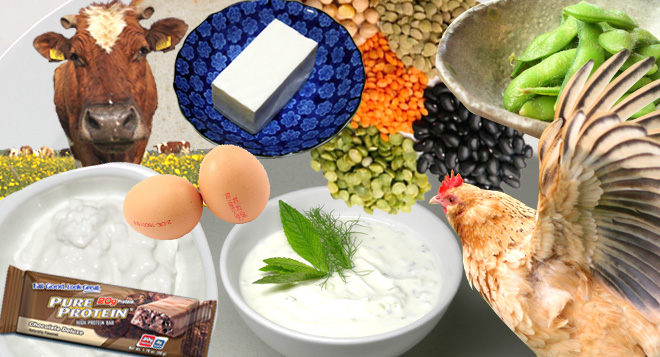
There is no need to focus solely on meat for good sources. Eggs, milk, yogurt, especially Greek yogurt, and cottage cheese are great sources of protein.
"A lot of people get tired of chicken breast, so maybe try boneless, skinless chicken thigh instead. You can try alternatives to beef, like bison, which is very lean," said Senior.
"Beans and legumes are great because there is a whole other set of nutrients in there. When you're making a salad, you can use chickpeas and chicken in the mix."
"Ideally, you want to focus on high quality sources of protein, people might use peanut butter as a source of protein for breakfast. But it's simply not enough protein, it's only giving you seven to eight grams of protein per tablespoon, which is not very much, and it's a lot of fat and calories."
What are high-quality protein sources?
High-quality sources of protein refer to foods that have all nine essential amino acids. There are 20 amino acids in your body's protein, nine of them are essential– meaning your body cannot produce it on its own.
Meat, poultry, fish, seafood, eggs, and dairy have all nine essential amino acids and are considered high quality protein.
"Soybeans, edmame, tofu, and hempseed are also high quality. Now, even though hempseed has all the essential amino acids, it's not very high in protein. You would need a lot of it, so I would use it in addition to some other protein. I wouldn't use it as a sole protein source in a meal."
Protein helps keep you full
Another reason why protein is important for weight management is because of its appetite-suppressing abilities. "A side effect for people trying to lose weight on a calorie-restricted plan is feeling hungry," said Senior.
"But if you're eating protein at every meal and snack, it's going to help satiate you. As a result, you can sustain a lower-calorie plan to help you lose weight. If you're hungry all the time, you're eating a lot of carbs and not a lot of protein, then you're likely going to eat more than what's on your plan."
Check out a few quick tips certified nutritionist Cass Evans has to say about getting protein in your everyday lifestyle.
